内容简介
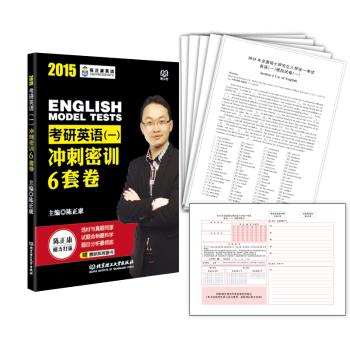
《考研英语(一)冲刺密训6套卷》由考研英语辅导名师陈正康老师融合多年授课经验编写,试题命制符合考研英语命题规律,试题设置、科学,方便考生在备考冲刺阶段加强薄弱环节,全面提升水平,满怀信心地迎接考试。
《考研英语(一)冲刺密训6套卷》包含6套冲刺密训试卷,文章以说明性议论文为主,涉及社会生活、商业金融、科普知识等主题,设有上下文语义题、词汇辨析题、逻辑关系题、事实细节题、文章主旨题、作者态度题、词义猜测题、推理判断题等题型。每套试卷给出精准答案,科学、细致的解析及答题技巧点拨。
目录
2015年全国硕士研究生入学统一考试
英语(一)模拟试卷(一)(共8页)
试卷(一)参考答案及试卷(一)精解(共24页)
2015年全国硕士研究生入学统一考试
英语(一)模拟试卷(二)(共8页)
试卷(二)参考答案及试卷(二)精解(共24页)
2015年全国硕士研究生入学统一考试
英语(一)模拟试卷(三)(共8页)
试卷(三)参考答案及试卷(三)精解(共24页)
2015年全国硕士研究生入学统一考试
英语(一)模拟试卷(四)(共8页)
试卷(四)参考答案及试卷(四)精解(共24页)
2015年全国硕士研究生入学统一考试
英语(一)模拟试卷(五)(共8页)
试卷(五)参考答案及试卷(五)精解(共24页)
2015年全国硕士研究生入学统一考试
英语(一)模拟试卷(六)(共8页)
试卷(六)参考答案及试卷(六)精解(共24页)
摘要与插图
The likeliest reason that luck-good or bad-is so often disregarded is that at first glance, it appears co
ntrary to the scientific basis of medicine.That is, doctors employ the best scientific knowledge available to diagnose and treat cliseasc.How well patients do thus reflects this acumen.Luck seems to havc become a curse in an era of evidence-ba
sed medicine, in which physicians and patients are encouraged to learn the latest relevant data to guide decisions.Dr.Peter A.Ubel, a University of Michigan internist and author of You're Stro
nger Than You Think, believes that his patients prefer biological explanations of why they are sick, rather than hearing that they have bad genes or bad luck.
But given the biological variability within given diseases, like cancer, and the fact that variable genetic makeup leads different individuals to respond differently to diseases and therapies, even better scientific knowledge will not eliminate the role played by luck.Chance, the British physician R.J.Epstein wrote in the Quarterly Journal of Medicine, ensures different outcomes within given sick populations.
A more frank acknowledgment of the role luck plays has a virtue: eliminating the tendency to second-guess and blame patients.Medicine today puts a huge emphasis on reducing risk factors for diseases, urging patients to take medications for diabetes and high cholesterol, for example, and to improve their diets.But risk reduction is not risk elimination.Even well-established interventions, like regular screening mammograms in women over 50 and antihypertensive pills for high blood pressure, lower the risk of death by 30 percent at most.That means that plenty of patients who are 100 percent compliant with their doctors' wishes will still die of breast cancer or complications of hypertension, like heart attacks or strokes.These are the unlucky ones.And then there are always those patients who co
nstantly disregard medical recommendations and seemingly suffer no ill effects.You guessed it: lucky.
……