内容简介
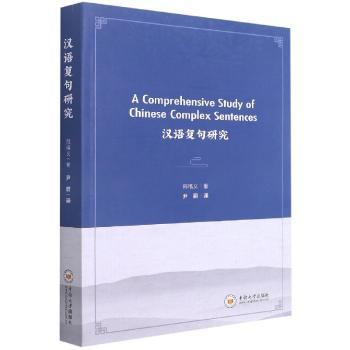
本书对整个汉语的复句系统做了深入的发掘和阐释,重视语法事实的挖掘,重视逻辑基础的考察,重视“语表-语里-语值”的三角验证,重视句法格局对语词运用的制约,同时重视对若干语言学问题的理论思考。
目录
Part I Introduction 1 Complex sentences and their classificationr/> 1.1 Complex sentencer/> 1.2 Classifications of complex sentences relationshipr/> 1.3 Non-relational classification 1.4 Summary 2 Connectives of complex sentencer/> 2.1 Features and classification of connectiver/> 2.2 Functions of connectiver/> 2.3 Summary 3 Trichotomy of complex sentences system 3.1 Causal, coordinate and adversative complex sentencer/> 3.2 Complex sentences patterns and classificationr/> 3.3 Trichotomy vs dichotomy 3.4 SummaryPart Ⅱ Causal Relation in the Broad Sense and Its Relevant Patternr/>Part Ⅲ Coordinate Relation in the Broad Sense and Its Relevant Patternr/>Part IV Adversative Relation in the Broad Sense and Its Relevant Patternr/>Part V Aspects of Complex Sentencer/> 31 Constructional counter-effects upon semantic relationr/> 32 Connectives indicating co-occurrence of connectives across the major categorier/> 33 The opposition of complex and simple sentences and the borderline caser/> 34 Attribute-head structures as clauser/> 35 NP le structures as clauser/> 36 Double-jects pattern and complex sentencer/> 37 The omission and understanding of the ject of the second claur/> 38 Non-ject causative sentences with potential jectr/> 39 The alternative interrogative (AI) sentence group: A case study 40 AI sentence groups introduced by specific interrogatives: Another case study