


 VIP会员
VIP会员

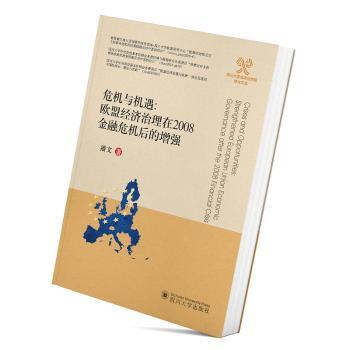
内容简介
本书以2008年来的欧元区主权债务危机及欧盟的应对、发展为背景,从欧洲一体化理论能主义和自由间主义出发,选取欧盟为应对危机采取的三个新措施:“欧洲学期”、欧洲系统风险委员会和欧洲稳定机制为案例,一方面对这两个欧洲一体化理论的阐释力、预测行检验并
目录
Chapter One Introduction
;1.1 Research Questions and Objectives
;1.2 Theoretical framework
;1.3 Research Design and Methodology
;1.4 Summary
Chapter Two Neo-Functionalism
;2.1 The Core Concepts of Neo-Functionalism
;2.2 Critiques of Neo-Functionalism
;2.3 Neo-Functionalism's Renaissance during the 1990s
;2.4 Neo-Functionalism's Development in the New Millennium
;2.5 Summary
Chapter Three Intergovernmentalism
;3.1 Hoffmann's Intergovernmentalism
;3.2 Confederalism
;3.3 The Domestic Politics Approach
;3.4 The \"Lo-in\" of States
;3.5 Moravcsik's LI (1998) and the Criticisms ..
;3.6 LI Modified by Moravcsik and Schimmelfennig (2009)
;3.7 LI and the EU Today
;3.8 Summary
Chapter Four Hypotheses Tests of Neo-Functionalism and
;New Insights based on Case Studies
;4.1 Evidence for HI : Economic Integration Leads to Political
;Integration
;4.2 Evidence for H2: Conditions for Spillover and the Claim
;of a Slowed-Down EU Integration Pace
;4.3 Evidence for H3 : Internal Dynamics of Institutionalization
;and Supranational Governance
;4.4 Evidence for H4 : Institutional/Legalistic Spillover
;4.5 Evidence for H5: Exogenous Spillover
Chapter Five Hypotheses Tests of Intergovernmentalism
;and New Insights based on Case Studies
;5.1 Evidence for H6: A Criticism Levelled at LI's Predictions
;of the Impervious Informal Consensus Practice in the
;Council
;5.2 Evidence for H7 : A Revised LI Three-Stage framework
;5.3 Evidence for H8: Impact of Exogenous Shocks from
;an LI Perspective
Chapter Six Conclusions
References